This website is not used for any commercial purposes; it serves purely private interests. No advertising banners appear.
To protect my privacy, I would like to refrain from mentioning my private address and telephone number.
However, you can always use the email address below to get in touch.
Name: Burkhard Zimmer
Email: love@stillarismus.de
Liability for content:
In accordance with Section 7 Paragraph 1 of the German Telemedia Act (TMG), I am responsible for my own content on this website. However, Sections 8 to 10 of the TMG do not obligate me to monitor stored or transmitted third-party content or to check it for legality. This does not, however, release me from the obligation to block or remove information in accordance with applicable laws.
Blob upon stain to stillarism
Creating art with digital tools – what could that look like? This question arose for me towards the end of my professional life, triggered by a particular experience. Despite my artistic training, I had worked in marketing for a long time and done a really good job there. Identifying new developments, solving problems creatively, troubleshooting – that was where my strength lay.
I recognized early that a digital revolution was imminent, which would force us to rethink our approach. Not just in marketing, but in almost every area of daily life. This included arts, which remained my passion. That’s where I wanted to continue my research.
But it wasn’t the time yet. I still went to work every morning, but I had almost nothing to do. My desktop was empty. I had delegated all tasks, relinquished responsibility. Now I stared at the walls and watched my younger colleagues bustle busily down the hallway.
My inactivity was driving me half-mad; my brain wanted activity, but I had nothing to offer to it. To appear “busy” nevertheless, I opened my iPad every day and played around with it.
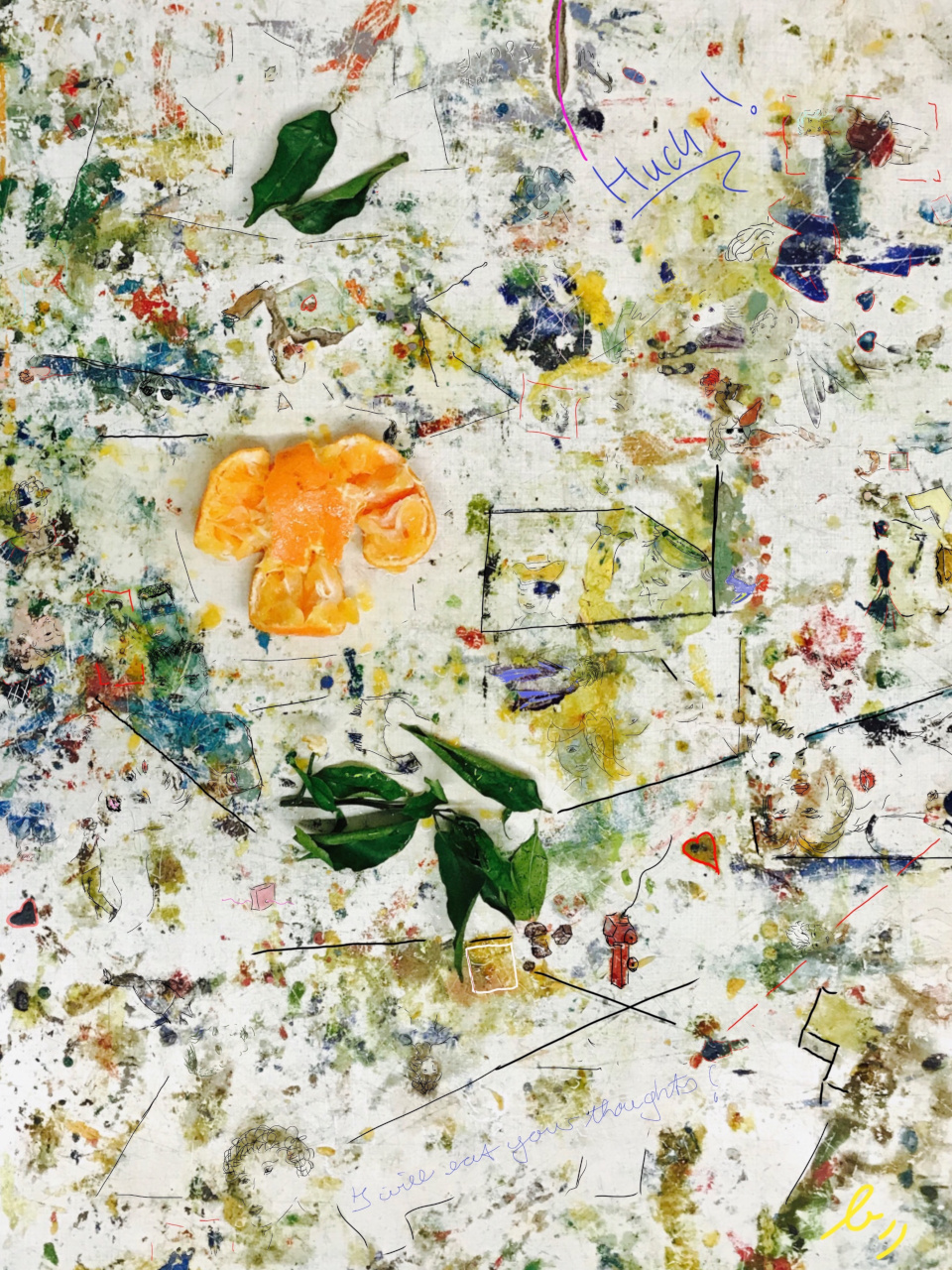
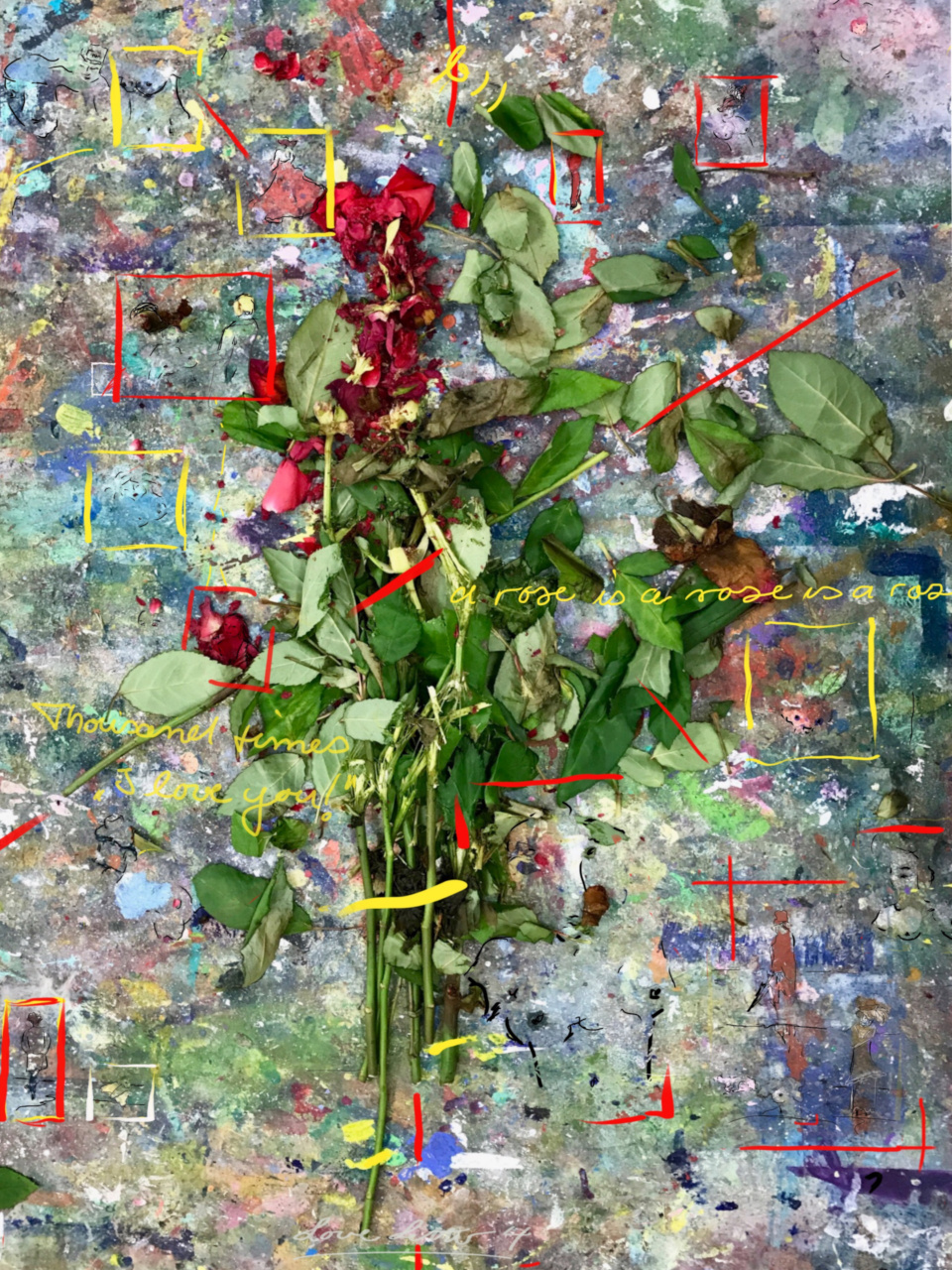
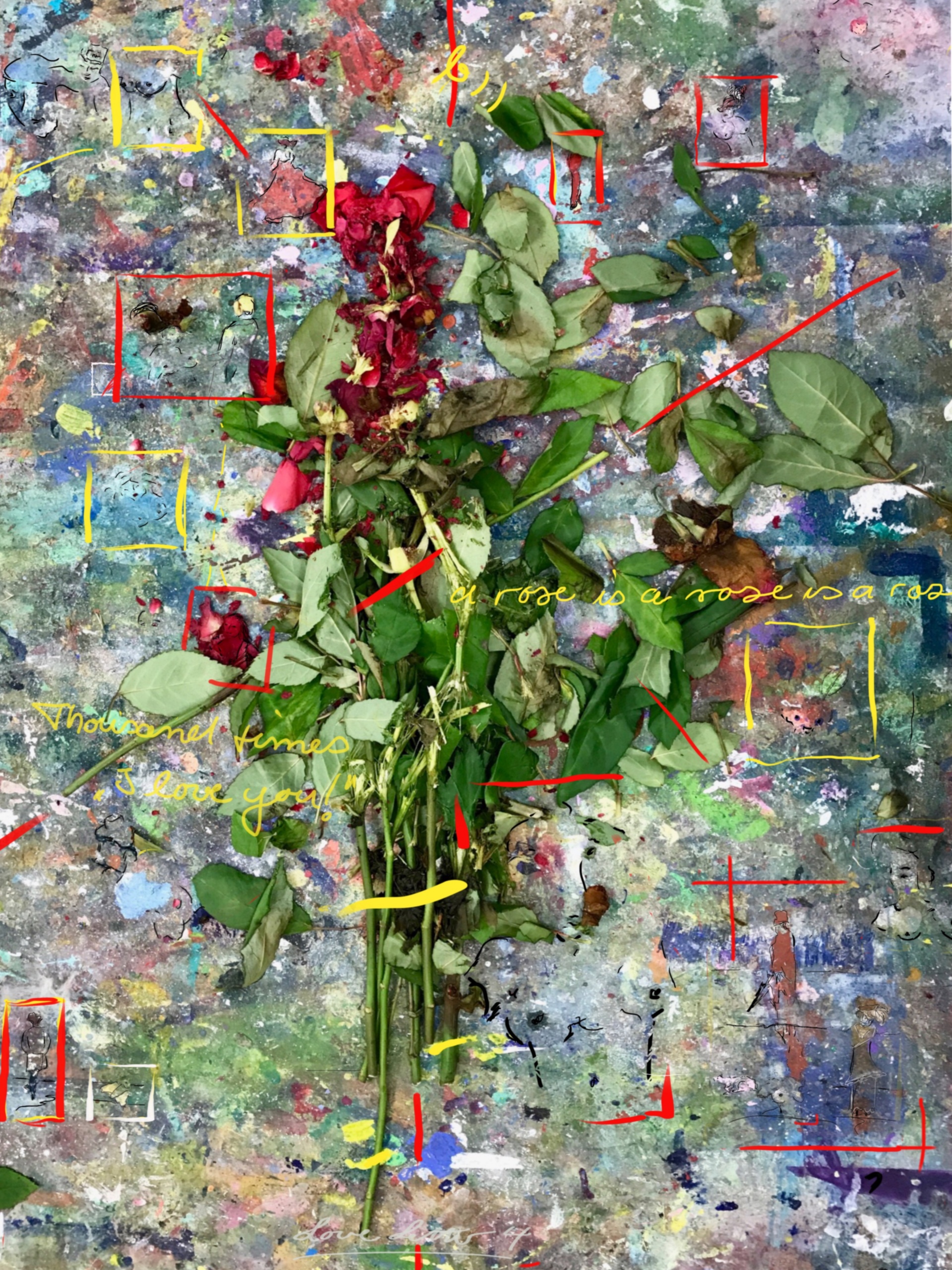
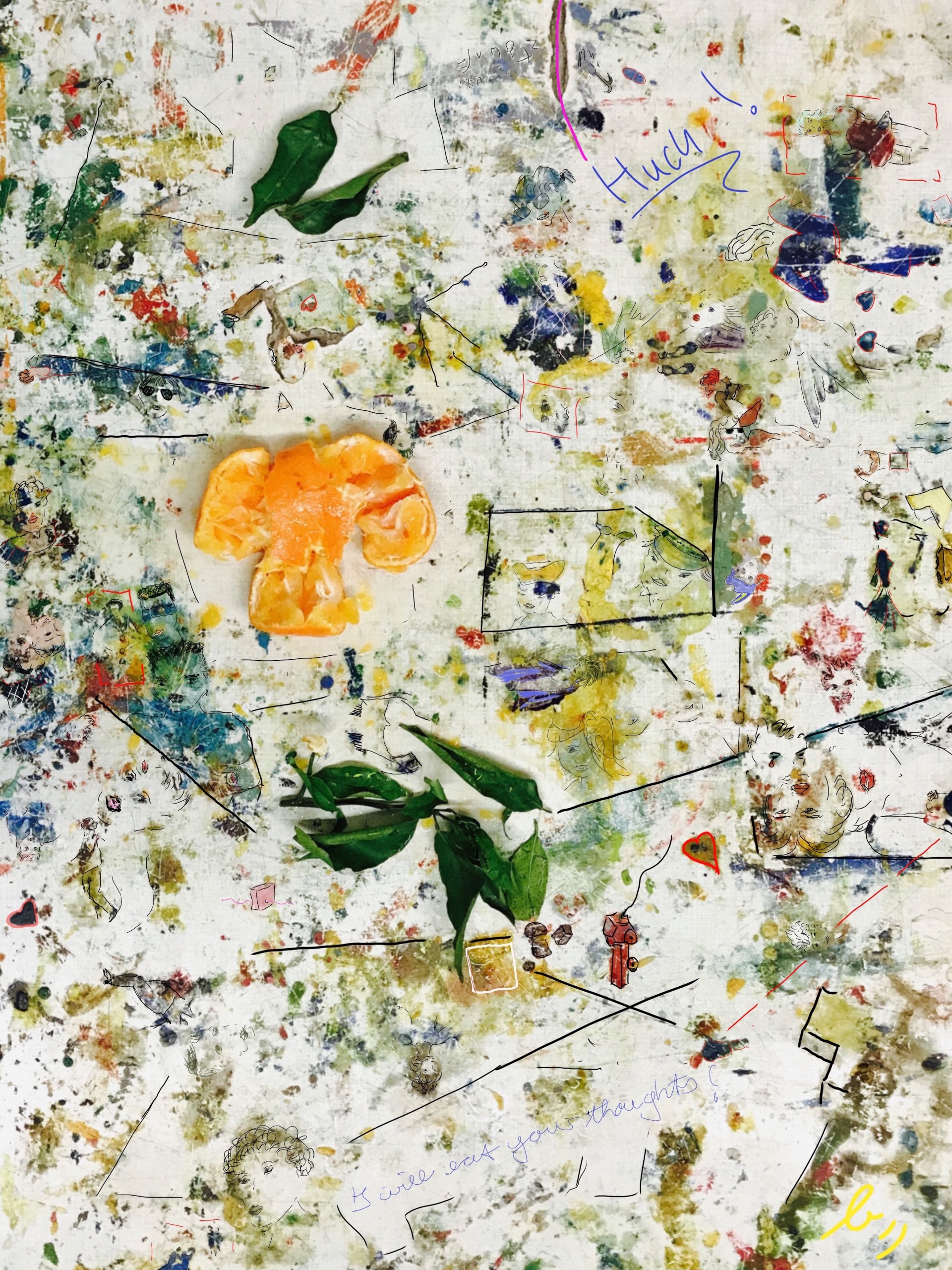
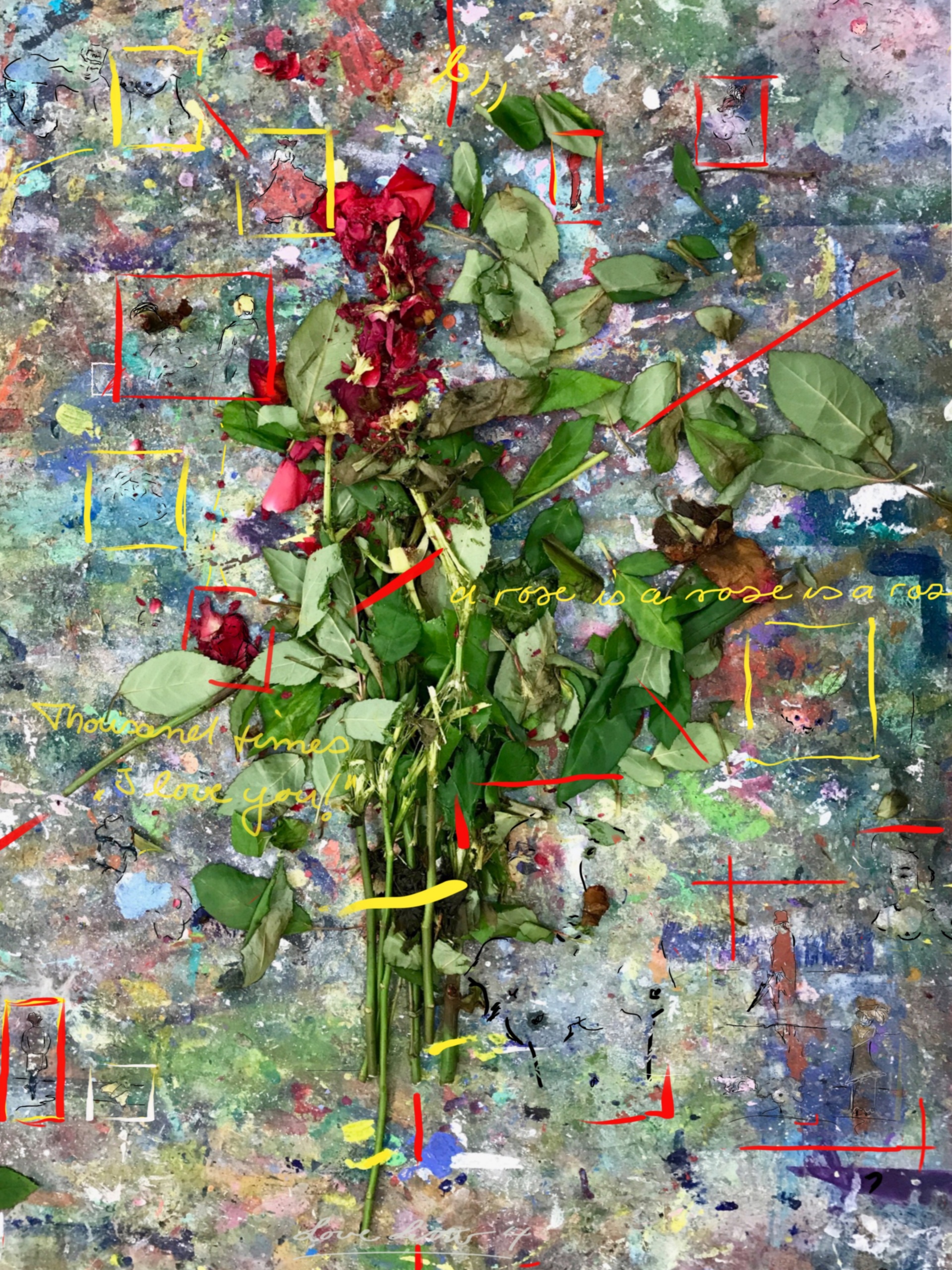
And so it was this morning. Suddenly, my gaze fell upon a photograph. At some point, I had photographed a painting table, covered in splashes and drips of paint. A random, colourful pattern on the touchscreen? Not quite. Because when I looked more closely, I discovered a female nude in the “jumble.” A torso, like those known from the antiquity.
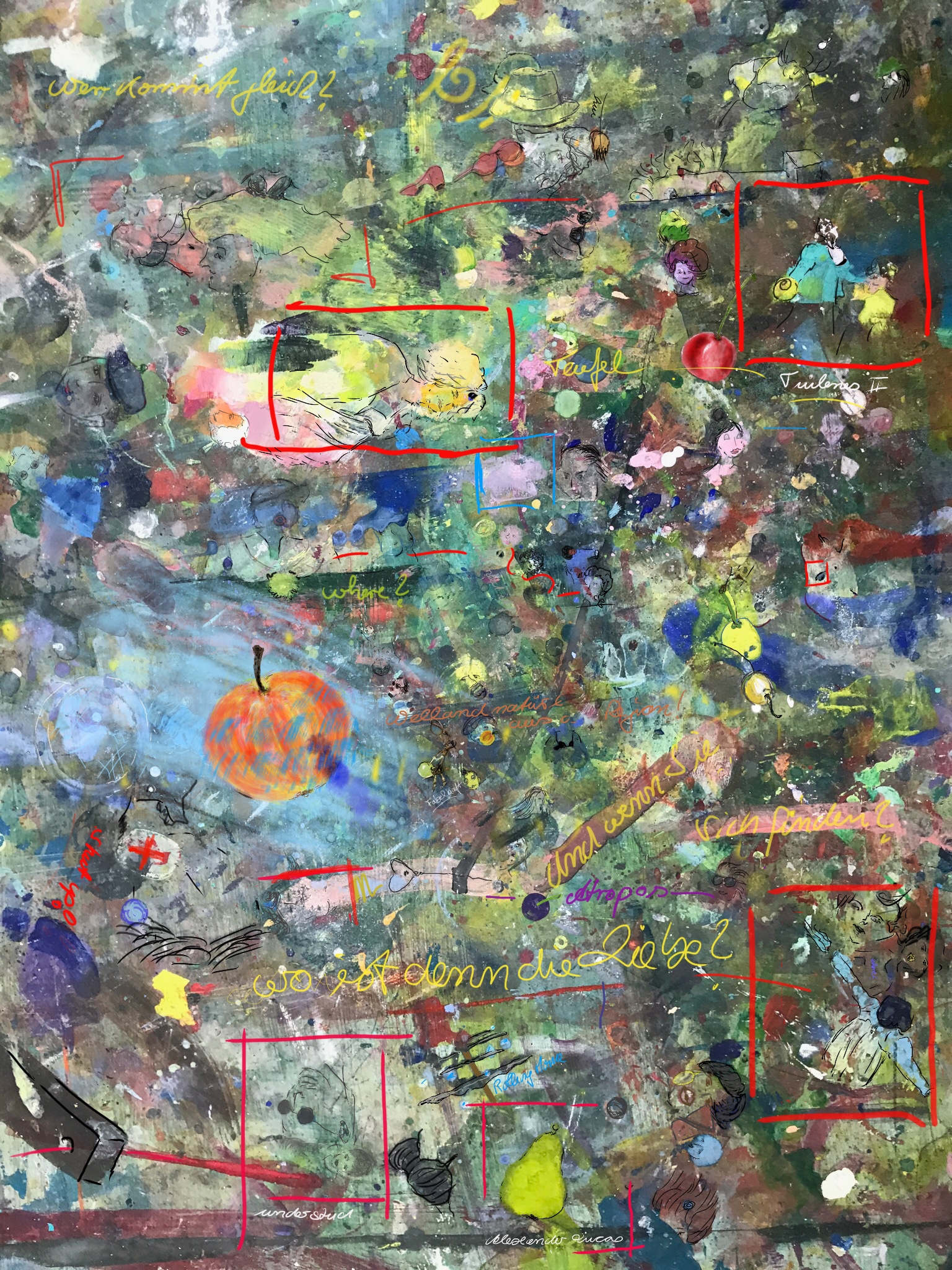
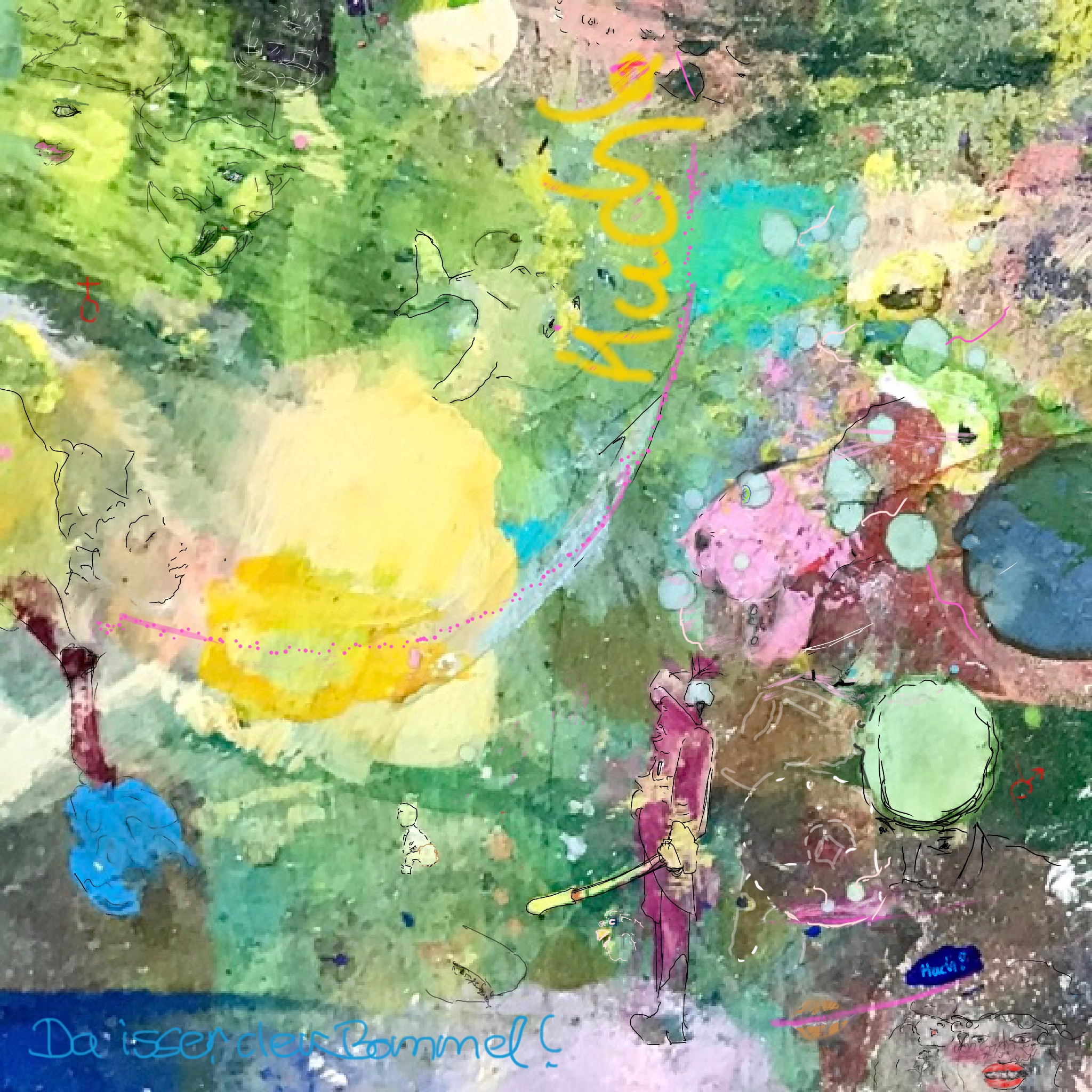
That interested me. I began to examine the sea of blotches more closely, zooming in. I saw even more shapes and patterns within them. An animal, for example, an apple, and people strolling by. It was astonishing how my brain transformed the patchwork into something meaningful.
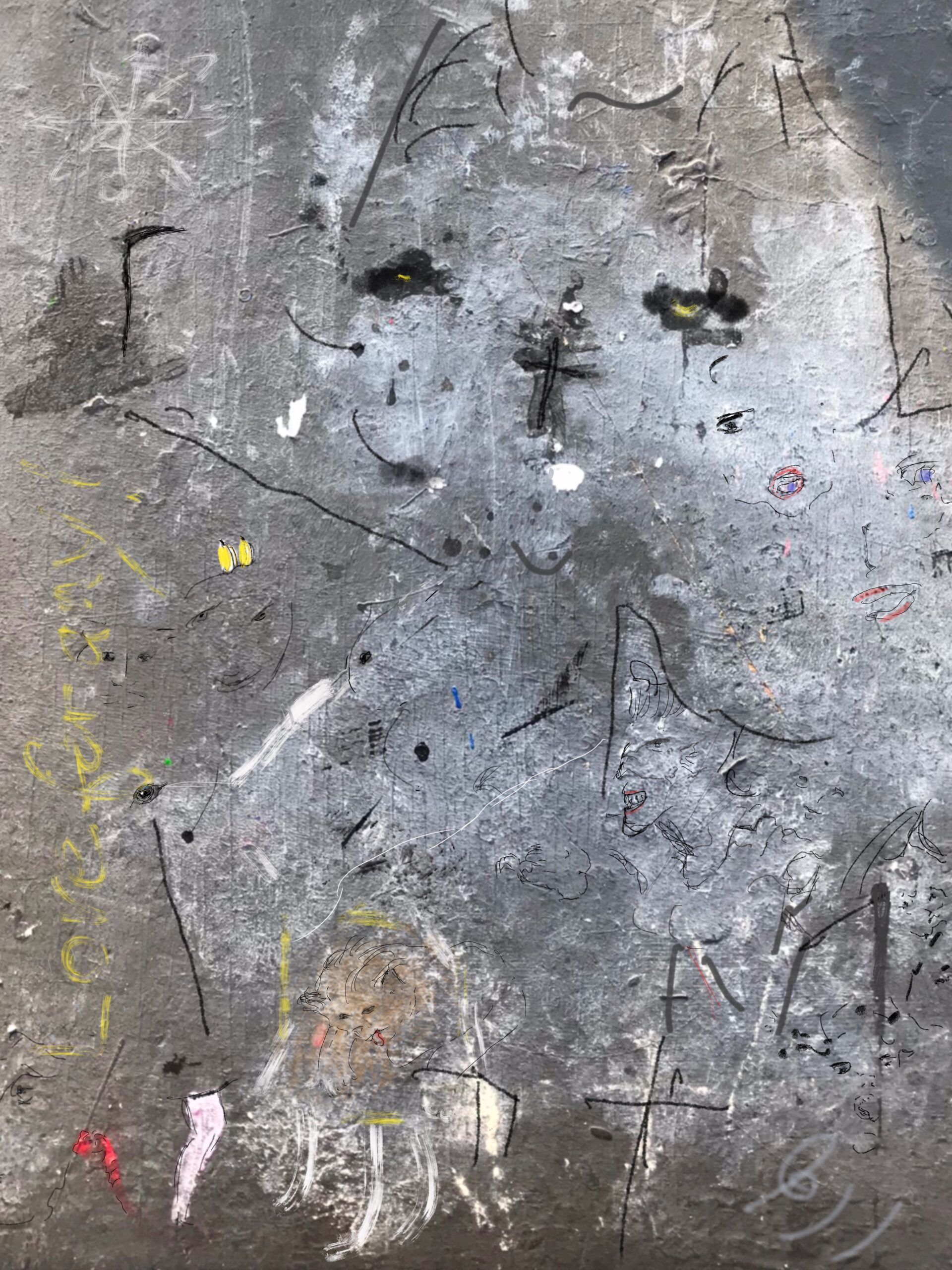
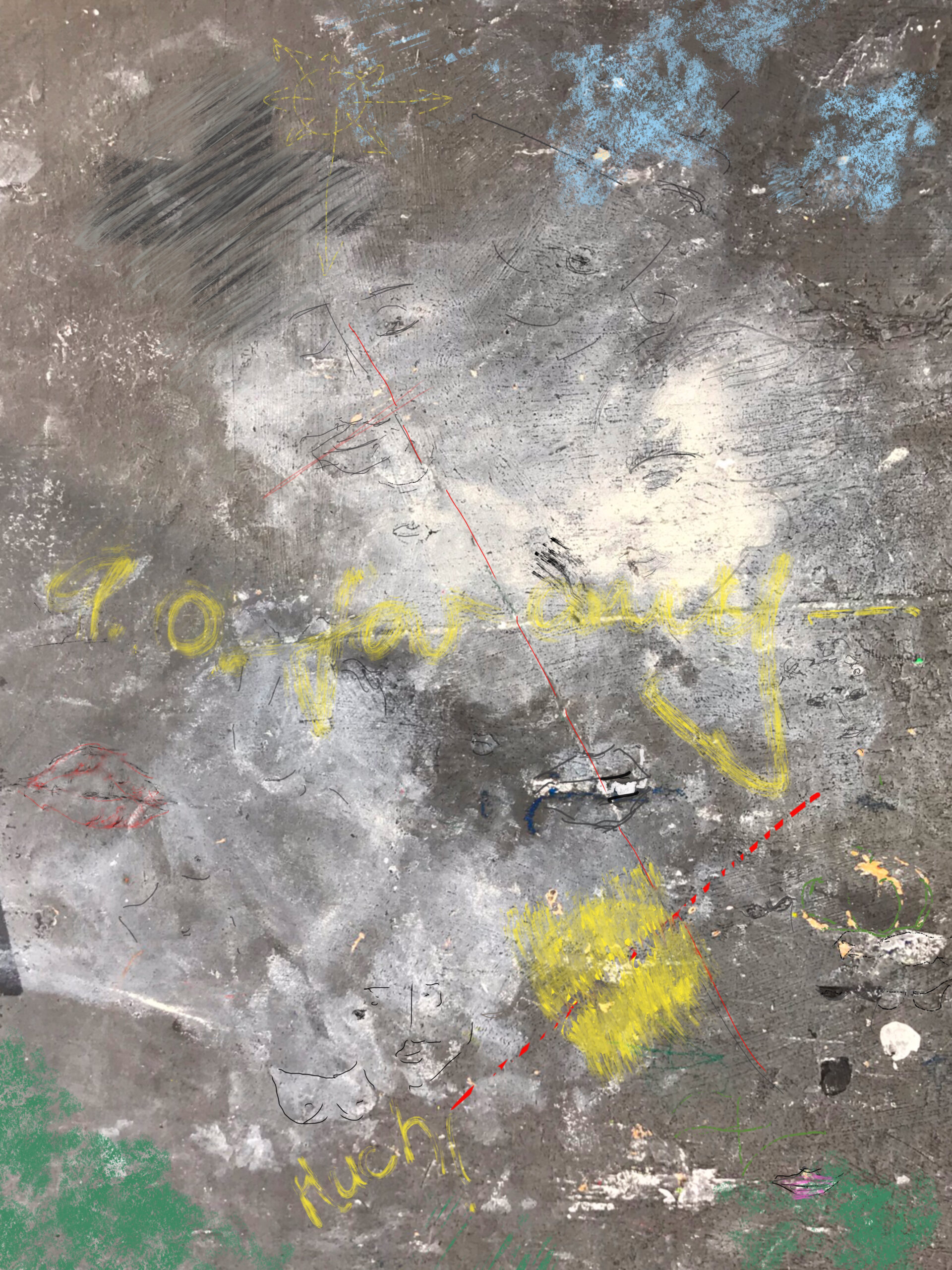
I opened the colour droplet images in a graphics app. There, I could give the patterns and stains a contour with simple, sometimes tentative, strokes. I began to play with the patterns and discovered more and more shapes and images within them. The sketchy lines ensured that the potential viewer would see the same thing as I did. The interplay of the iPad, the stylus, and the stain photos stimulated my brain. They helped me unleash my creativity and fantasy.
I spent the next few days at the office experimenting on my iPad. The digital pen was my most important tool. I added more blot photos. Here, too, I could discern mysterious figures, animals, and plants within the blots and stains, and carefully edit them. These journeys of discovery were not only entertaining, but also deeply satisfying. A kind of meditation that kept me from getting bored. Hours could pass as I created digital images that were barely distinguishable from traditional paintings.
Painting and drawing were never my thing during my art studies; I primarily worked conceptually. I’m continuing that with digital painting now. Because behind it are neither brushes, paints, nor pencils, but a creative concept: making chance occurrences tangible using digital tools.
I call this particular way of working artistically stillarism. I owe the term to an Italian colleague and his reference to the Italian words stilla (drop) and stillare (to filter out, seep through, trickle, reveal a secret).
For further discoveries, here’s a collection of links: